


Guide to International Money Transfers in Thailand (2025)

.png&w=3840&q=75)
Guide to International Money Transfers in Thailand (2025)
Learn about regulations, fees, and options for sending and receiving money in Thailand, with tips for expats and visitors using DeeMoney services.
The Basics of Money Transfers in Thailand
.png)
Navigating money transfers in Thailand requires understanding the country's strict regulations. Whether you're an expat sending money home, a business making international payments, or receiving funds from abroad, knowing the essentials is crucial. For more information on business solutions, check out our DeeBusiness page.
The Thai Baht (THB) is a controlled currency, with the Bank of Thailand closely monitoring international transfers. This oversight impacts the necessary paperwork, processing time, and available transfer methods. If you're looking for competitive exchange rates, visit our Currency Exchange Services page.
Options for international money transfers include banks, services like DeeMoney, and digital platforms, each offering varying benefits in terms of speed, cost, and convenience. To learn more about our services, explore the Partners page.
Sending money abroad typically involves more paperwork and scrutiny than receiving funds, especially for large or regular transfers. Key considerations include fees, exchange rates, and processing time, all of which influence the final amount received and the transaction's smoothness.
Sending Money from Thailand: What You Need to Know
When sending money from Thailand, compliance with the Bank of Thailand's regulations is essential. These rules vary based on the transfer amount and purpose. For a reliable option, consider using our DeeLight app for instant transfers.
For transfers exceeding ฿50,000, identification is required. Transfers over ฿100,000 necessitate additional details about the recipient and the transfer's purpose. Foreigners may need to verify their income source and tax compliance.
While there's no fixed limit on sending foreign currency, funds must return to Thailand within 360 days unless specific conditions are met, such as staying in the country for less than three months.
Transfer fees vary by provider, with banks typically charging a fixed fee plus an exchange rate markup. The cost can be borne by the sender, receiver, or shared.
Timing is crucial; standard transfers take 1-5 business days, but expedited options are available for a fee. For more details on our transfer times, visit the DeeMoney page.
Receiving Money in Thailand: What you need to know
To receive international funds in Thailand, provide the sender with your full name, address, bank name, and account number (5-16 digits), along with the transfer's purpose to comply with Thai regulations.
Not all Thai banks handle international transfers. As of 2025, banks like Bangkok Bank, Kasikorn Bank, Krung Thai Bank, Siam Commercial Bank, CIMB Thai Bank, Bank of Ayudhya (Krungsri), and Kiatnakin Phatra Bank do, while Citibank, HSBC, and TMBThanachart Bank do not.
Transfer limits vary by bank, with Bangkok Bank and Kasikorn Bank allowing up to 2,000,000 THB per transfer, Siam Commercial Bank up to 1,499,999 THB, and others up to 500,000 THB.
Processing times range from instant to five days, depending on the sending bank and method. Transfers can be tracked via mobile apps, online banking, or customer service. For a seamless experience, consider using our DeeBusinessplatform.
DeeMoney's International Transfer Services
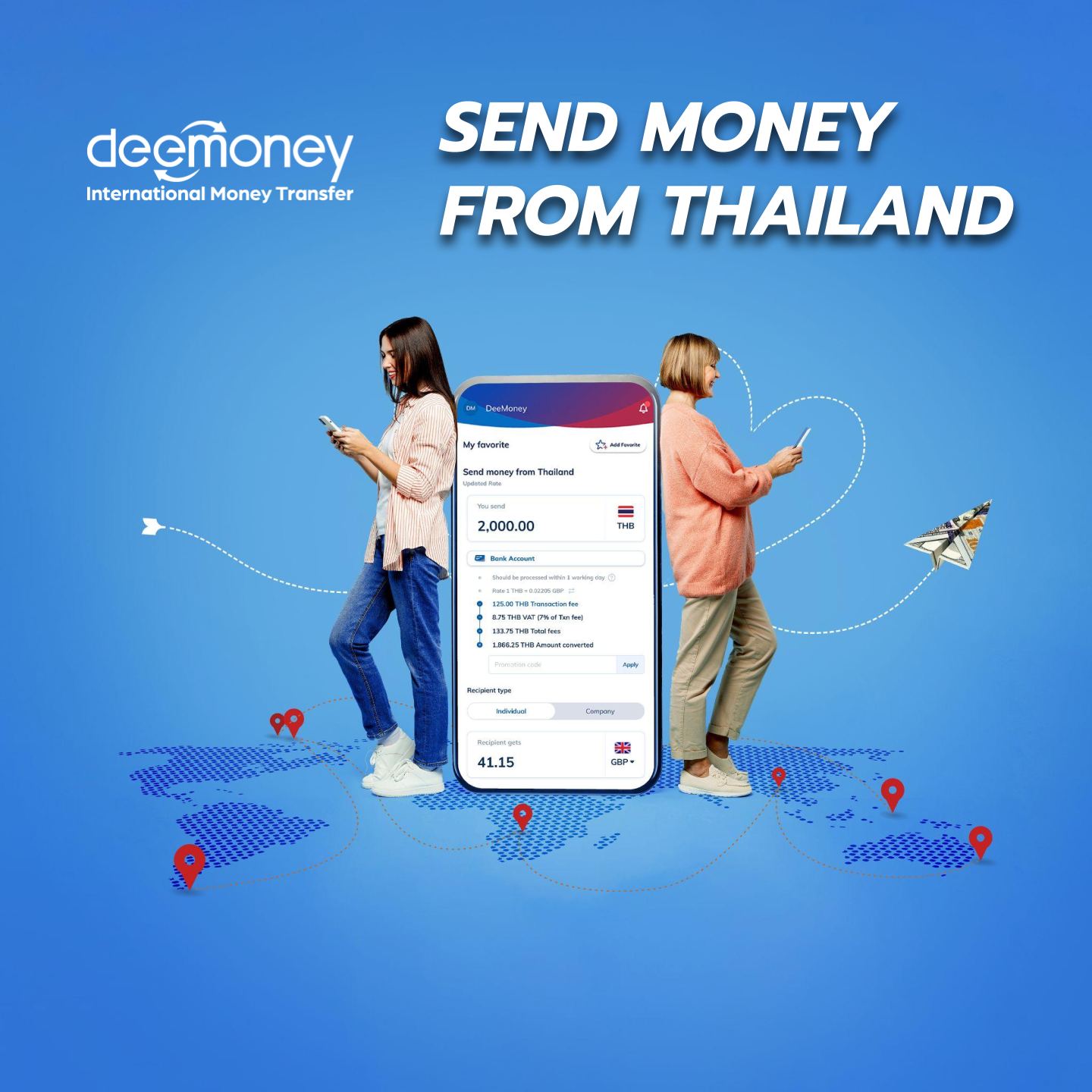
DeeMoney is a prominent choice for international transfers in Thailand, catering to both residents and visitors. It supports transfers to 55 countries, offering a flexible solution for diverse needs.
A standout feature is DeeMoney's transparent fee structure, with transfers costing ฿125-150 plus VAT, regardless of the amount, eliminating hidden fees common with banks. For more information on our competitive rates, visit the Currency Exchange Services page.
For receiving money in Thailand, DeeMoney typically delivers funds within 24 hours to 48 countries, requiring basic identity checks to comply with Thai regulations while maintaining efficiency.
DeeMoney's online platform simplifies the process, allowing users to initiate and track transfers conveniently. With competitive exchange rates, DeeMoney is an excellent option for regular international transfers to and from Thailand.
Digital vs. Traditional Transfer Methods
.png)
In Thailand, both digital and traditional money transfer methods are available, each with distinct advantages. Mobile banking has revolutionized international transfers, with major Thai banks offering user-friendly apps that provide real-time exchange rates and lower fees than in-branch services.
For those who prefer traditional methods, visiting a bank in person remains an option. This approach requires proper identification and sometimes additional paperwork, offering face-to-face assistance that many find reassuring for large transactions.
The gap between digital and traditional methods is narrowing as banks enhance their online services. Many now offer hybrid solutions where transfers can be initiated online and completed with in-person verification if necessary, aiding newcomers to Thailand in navigating the financial system.
Special Considerations for Expats and Visitors
Expats and visitors in Thailand face unique challenges with international money transfers. Establishing regular transfer channels is crucial for long-term stays. Thai regulations require proof of income source, especially for regular transfers exceeding certain amounts.
When purchasing property, it's important to handle transfers carefully. Large sums for real estate should be marked as "property purchase" to comply with Thai law, creating a necessary record for foreign ownership.
Retirees receiving pensions or regular income from abroad can benefit from specialized services to minimize costs. DeeMoney offers favorable rates for regular transfers, and some banks provide special accounts for foreigners with consistent overseas income. Bangkok Bank’s New York branch can reduce fees for US payments.
Maintaining clear records of all international transfers is essential for visa renewals and tax purposes. For more information on our services, check out the Partners page.
Security and Compliance in Thai Money Transfers
Thailand enforces stringent regulations on international money transfers to prevent financial crimes. The Bank of Thailand monitors all foreign exchange transactions, requiring proper documentation for both sending and receiving funds.
Transfers exceeding ฿50,000 require identity verification, while those over ฿100,000 demand detailed information about the recipient and transfer purpose, ensuring compliance with global anti-money laundering standards.
DeeMoney adheres to these regulations with robust verification processes. New users must provide valid ID documents before initiating transfers, and the platform monitors transaction patterns for suspicious activities.
For large international transfers, be prepared to provide proof of income source. This documentation safeguards both you and the financial system. Regular transfers for purposes like family support or bill payments typically proceed smoothly with the correct documentation.
Optimizing Your International Transfers
Strategic planning can save money and time when transferring funds to or from Thailand. Compare exchange rates from different providers before making a decision, as small differences can add up on large transfers. DeeMoney often offers favorable rates for international transfers in Thailand.
Consider the timing of your transfers, as currency values fluctuate daily. Monitoring trends can help you transfer when rates are most favorable. Some services offer rate alerts or scheduled transfers for regular transactions.
Keep your documents organized and readily available. Having your passport, visa, work permit, and proof of income on hand speeds up the process. For property purchases or large transfers, prepare additional documents like contracts or statements verifying the money's origin.
If possible, consolidate transfers to reduce fees instead of making multiple small transactions. Lastly, maintain a good relationship with your Thai bank. Long-term customers often receive better service and sometimes more favorable rates on international transfers.
FAQ: Your Questions About Thai Money Transfers Answered
What's the maximum amount I can send from Thailand? You can send up to $50,000 USD without extra paperwork. For larger amounts, you'll need proof of income and purpose.
How long do transfers to Thailand typically take? Most transfers take 1-5 business days. DeeMoney provides next-day delivery to 48 countries.
Do I need a Thai bank account to receive money? Yes, usually. However, services like Western Union offer cash pickup.
Are there special requirements for property purchases? Yes. Transfers for buying condos must state this purpose and comply with Foreign Exchange rules.
Which Thai banks accept international transfers? Banks like Bangkok Bank, Kasikorn Bank, and Siam Commercial Bank accept them. Smaller banks might have limits.
Do I need to pay tax on money transferred to Thailand? Usually not, but business or income transfers might be taxable. Consult a tax expert for advice.
DeeMoney is a licenced entity under the “Authorized Money Transfer Agent License no. MT125590013”, “Money Changer License no. MC125600121”, “E-Transfer License no. Bor(4) 033/2561)” and “E-Money License no. Bor(2) 001/2565)” Issued by the Bank of Thailand and the Ministry of Finance.